
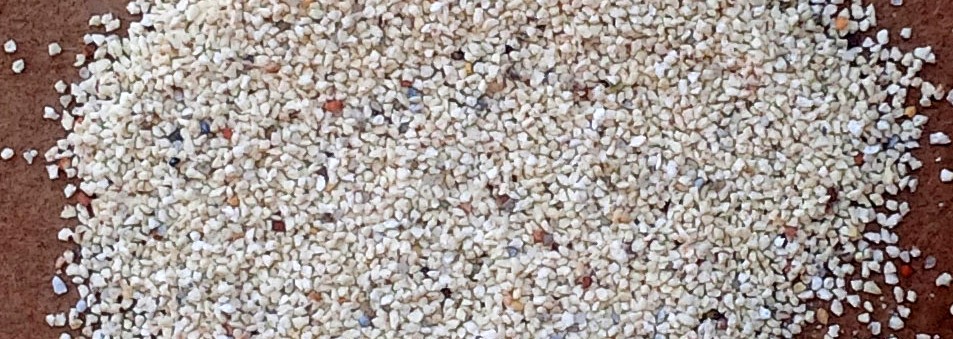
Grog is a gritty material that gives the clay strength which can make it easier to throw and hand build. It reduces clay shrinkage and cracking which makes firing easier, and it adds texture to the pottery, too. There is a range of grogs, from fine to coarse.
Grog is usually made from crushed and ground potsherds, reintroduced into raw clay to temper it before making ceramic ware. It has a high percentage of silica and alumina. When added to clay, grog can help with thermal expansion and prevent cracking. High grog bodies are common for raku clays, where thermal shock is part of the process.
Grog is often very structural as well. When throwing on the wheel or slab building, the grog will help keep pieces from slumping. If throwing a tall or large form, grog is good for stability. The opposite end of the spectrum is porcelain clay, which has no grog, no contaminants, just white kaolin clay that fires thin and smooth like glass.